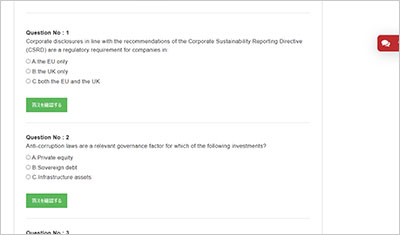
サンプル問題 1: Excluding investment in companies with a history of labor infractions is best categorized as a(n):
A: universal exclusion.
B: idiosyncratic exclusion.
C: conduct-related exclusion
正解:C
Explanation: Excluding investment in companies with a history of labor infractions is best categorized as a conduct-related exclusion. This type of exclusion focuses on the behavior and practices of companies, particularly in relation to their treatment of employees and adherence to labor standards. Behavioral Criteria: Conduct-related exclusions target specific behaviors or practices that are deemed unacceptable, such as labor infractions, human rights violations, or environmental harm. Ethical Considerations: These exclusions are based on ethical and social considerations, aiming to avoid investing in companies that do not meet certain standards of conduct. Impact on Valuation: By excluding companies with poor labor practices, investors aim to reduce exposure to risks associated with legal liabilities, reputational damage, and operational disruptions. References: MSCI ESG Ratings Methodology (2022) - Explains different types of exclusion criteria, including conduct-related exclusions, and their rationale. ESG-Ratings-Methodology-Exec-Summary (2022) - Discusses the importance of considering company behavior in ESG investment strategies
サンプル問題 2: Which of the following investor types most likely has the shortest investment time horizon?
A: Foundations
B: General insurers
C: Defined benefit pension schemes
正解:B
Explanation: General insurers typically have the shortest investment time horizon among the three investor types listed. Here’s a detailed explanation: Nature of Liabilities: General insurers deal with short-term liabilities, such as claims arising from accidents, natural disasters, or other events that can happen frequently and require prompt payment. This necessitates a relatively liquid and short-term investment portfolio to ensure that funds are readily available to cover claims. Investment Strategies: Due to the need to maintain liquidity and manage risk, general insurers often invest in short-duration assets. These might include short-term bonds, money market instruments, and other liquid assets that can be quickly converted to cash. Comparison with Other Investors: Foundations: Foundations typically have longer-term investment horizons as they aim to support their missions over an extended period. Their endowment funds are managed to generate returns that can sustain operations and grant-making activities in perpetuity. Defined Benefit Pension Schemes: These pension schemes also have long-term horizons, as they need to ensure that funds are available to meet the retirement benefits of employees over many years, often several decades. CFA ESG Investing References: The CFA Institute explains that general insurers have shorter investment horizons due to the nature of their liabilities and the need for liquidity to pay out claims promptly (CFA Institute, 2020). The institute also notes that the investment strategies of general insurers are designed to align with their short-term liabilities, making their investment horizon shorter compared to foundations and pension schemes.
サンプル問題 3: When assessing credit and ESG ratings, which of the following statements is most accurate?
A: The correlation between country ESG risk and credit ratings is high
B: The correlation between ESG ratings among rating providers is high
C: The correlation between credit ratings among credit rating agencies (CRAs) is low
正解:A
Explanation: There is a high correlation between country ESG risk and credit ratings. Countries with higher ESG risks typically face higher borrowing costs and lower credit ratings due to the perceived increased risk associated with environmental, social, and governance factors. This correlation reflects the importance of ESG factors in assessing the overall creditworthiness and financial stability of countries.