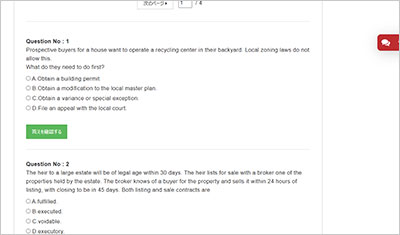
Massachusetts Real Estate Salesperson サンプル問題プレビュー(抜粋)
収録内容から抜粋したサンプル問題です。「解答・解説を表示」をクリックすると正解を確認できます。
サンプル問題 1: What is the function of a promissory note or bond when used in conjunction with a mortgage?
A: It furnishes a complete legal description of the property.
B: It makes the borrower personally obligated to pay the debt.
C: It provides the elements necessary to make the mortgage valid.
D: In case of default, it limits the lender's rights to interest only.
正解:B
Explanation: In Massachusetts real estate law and as covered in the Massachusetts Real Estate Salesperson Study Guide, a promissory note (sometimes called a bond) is a written promise by the borrower to repay a specific amount of money to the lender under agreed terms. The note functions as evidence of the debt and creates a personal obligation for the borrower to pay the debt according to the specified schedule. This personal obligation is what differentiates the note from the mortgage document itself. While the mortgage creates a lien against the property and provides security for the loan (giving the lender rights to the property in case of default), the promissory note represents the actual debt and the borrower's promise to repay it. Without the note, the mortgage lien alone is insufficient because it only secures the loan; it does not obligate repayment. The promissory note generally contains the principal amount, interest rate, payment schedule, maturity date, and any penalties for default. If the borrower defaults on payments, the lender can take legal action based on the note. The mortgage provides the lender the right to foreclose on the property if the note is not paid, but the note itself establishes the borrower's personal liability. This is explicitly stated in official Massachusetts real estate law references and study guides: “The note is the borrower's personal promise to pay the debt.” “The mortgage is the security instrument that pledges the property as collateral.” Reference: Massachusetts Real Estate Salesperson Study Guide, Chapter 8: Financing Instruments and Mortgages
サンプル問題 2: Which of the following is true of a quitclaim deed?
A: It cannot be used to transfer a title held in fee simple.
B: It has warranties similar to a special warranty deed.
C: It can be used to remove a cloud on a title.
D: It cannot be recorded.
正解:C
Explanation: A quitclaim deed is commonly used in Massachusetts to transfer whatever interest the grantor may have in the property, without any warranties of title. The grantor does not guarantee that they own the property or that the title is clear; they are simply releasing (“quitting”) any claim they might have. This makes quitclaim deeds useful for curing defects or removing a cloud on title, such as correcting a name, releasing an interest, or resolving minor disputes. While Massachusetts typically uses quitclaim deeds even in regular sales transactions (where other states may prefer warranty deeds), their primary legal function is still to transfer without guarantees. The other options are incorrect: A: It can transfer fee simple interest. B: It provides no warranties, unlike a special warranty deed. D: It can be recorded. Reference: Massachusetts Real Estate Salesperson Candidate Handbook C Transfer of Title; M.G.L. Chapter 183 (Conveyances of Land).
サンプル問題 3: A salesperson's client is the lessee. Who does the salesperson represent?
A: lender
B: tenant
C: landlord
D: lien holder
正解:B
Explanation: In a leasing transaction, the lessee is the tenant ― the party obtaining the right to occupy and use the property. The lessor is the landlord, who owns the property and grants possession through the lease. Therefore, when a salesperson’s client is the lessee, the salesperson represents the tenant in the transaction. The role is similar to representing a buyer in a purchase transaction ― the agent owes fiduciary duties such as loyalty, confidentiality, and disclosure to the tenant client. The other options do not apply: Lender (A) provides financing, not leasing services. Landlord (C) would be the lessor, not the lessee. Lien holder (D) is a creditor with a security interest in property, unrelated to this relationship. Thus, the correct answer is B: tenant. Reference: Massachusetts Real Estate Salesperson Candidate Handbook C Agency Law; M.G.L. c.112, §87AAAC112.
Pennsylvania Real Estate Commission Massachusetts Real Estate Salesperson試験の準備に向けた復習資料としてMassachusetts Real Estate Salesperson問題集を提供しています。Massachusetts Real Estate Salesperson Exam試験の主要な知識ポイントをカバーしています。ページ上部の「Massachusetts Real Estate Salesperson 試験を開始する」ボタンからオンライン無料サンプル問題を確認できます。
Massachusetts Real Estate Salesperson問題集の収録内容と更新状況はどうなっていますか?
答え:現在提供されているMassachusetts Real Estate Salesperson問題集には、Massachusetts Real Estate Salesperson試験対策に向けた全135問の練習問題と解答が収録されています。Massachusetts Real Estate Salesperson Exam試験に向けた復習に利用できます。
どうやってMassachusetts Real Estate Salesperson問題集を使って復習しますか?
答え:時間の許す限り、内容を理解しながら計画的に復習することをお勧めします。Massachusetts Real Estate Salesperson問題集の多くの設問と知識ポイントを一度の学習ですべて定着させるのは難しいため、3回に分けて反復する方法が効果的です。1回目は全体を通して解説とあわせて理解し、2回目は分野ごとに自分の言葉で説明できるか確認し、3回目は試験直前に間違えやすい設問を中心に総復習します。
学習時間が限られている場合は、Massachusetts Real Estate Salesperson問題集の選択問題を中心に重要キーワードと正答の根拠を優先して整理してください。また、ドラッグ&ドロップ問題やシミュレーション形式の設問については、手順や前提条件を含めて仕組みを理解しておくことが重要です。