IT認証試験問題集
GOWUKAKU|IT認定資格の最新の試験問題集(PDF版・無料サンプル問題)を提供しています
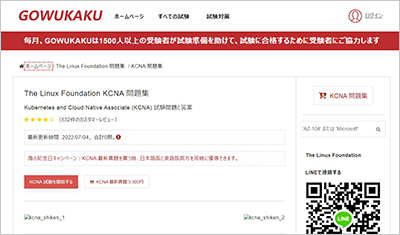
 ホームページ / The Linux Foundation 問題集  / KCNA 問題集

The Linux Foundation KCNA 問題集 練習問題・模擬試験|日本語版&英語版対応

Kubernetes and Cloud Native Associate (KCNA) 試験問題と答案

(0件のカスタマーレビュー)

最終更新日: 2026/10/20  収録内容確認済 | PDF問題集: 全 126 問収録

KCNA試験対策の学習資料(PDF版:日本語・英語2言語セット)|1年間(365日)無料アップデート付
KCNA 試験を開始する   
kcna_shiken_1
kcna_shiken_2

KCNA 問題集 仕様・サポート案内

対象試験 The Linux Foundation KCNA — Kubernetes and Cloud Native Associate (KCNA)
収録問題数 全 126 問(解答付き/オンライン無料サンプル 170 問公開中)
提供形式・言語 PDF版(日本語版・英語版の2言語セット)
販売価格(税込) 6,880円(税込) ※1回払いの買い切り商品です。自動更新や追加請求はありません。
引き渡し・有効期間 決済完了後すぐにダウンロード可能(日本語版が準備中の科目は、英語版を即時ダウンロードのうえ、日本語版は準備完了次第ご登録メールへ自動送付・有効化されます)。ご購入日から1年間(365日間)無料アップデート対応(期間内の更新版も追加料金なしでダウンロード可能)。
お問い合わせ窓口 メールサポート:[email protected](注文確認・再送・教材に関するご質問|返金・交換条件)

KCNA サンプル問題プレビュー(抜粋)

収録内容から抜粋したサンプル問題です。「解答・解説を表示」をクリックすると正解を確認できます。

サンプル問題 1: What native runtime is Open Container Initiative (OCI) compliant?

  • A: runC
  • B: runV
  • C: kata-containers
  • D: gvisor
正解:A
Explanation: The Open Container Initiative (OCI) publishes open specifications for container images and container runtimes so that tools across the ecosystem remain interoperable. When a runtime is “OCI-compliant,” it means it implements the OCI Runtime Specification (how to run a container from a filesystem bundle and configuration) and/or works cleanly with OCI image formats through the usual layers (image → unpack → runtime). runC is the best-known, widely used reference implementation of the OCI runtime specification and is the low-level runtime underneath many higher-level systems. In Kubernetes, you typically interact with a higher-level container runtime (such as containerd or CRI-O) through the Container Runtime Interface (CRI). That higher-level runtime then uses a low-level OCI runtime to actually create Linux namespaces/cgroups, set up the container process, and start it. In many default installations, containerd delegates to runC for this low-level “create/start” work. The other options are related but differ in what they are: Kata Containers uses lightweight VMs to provide stronger isolation while still presenting a container-like workflow; gVisor provides a user-space kernel for sandboxing containers; these can be used with Kubernetes via compatible integrations, but the canonical “native OCI runtime” answer in most curricula is runC. Finally, “runV” is not a common modern Kubernetes runtime choice in typical OCI discussions. So the most correct, standards-based answer here is A (runC) because it directly implements the OCI runtime spec and is commonly used as the default low-level runtime behind CRI implementations

サンプル問題 2: Which API object is the recommended way to run a scalable, stateless application on your cluster?

  • A: ReplicaSet
  • B: Deployment
  • C: DaemonSet
  • D: Pod
正解:B
Explanation: For a scalable, stateless application, Kubernetes recommends using a Deployment because it provides a higher-level, declarative management layer over Pods. A Deployment doesn’t just “run replicas”; it manages the entire lifecycle of rolling out new versions, scaling up/down, and recovering from failures by continuously reconciling the current cluster state to the desired state you define. Under the hood, a Deployment typically creates and manages a ReplicaSet, and that ReplicaSet ensures a specified number of Pod replicas are running at all times. This layering is the key: you get ReplicaSet’s self-healing replica maintenance plus Deployment’s rollout/rollback strategies and revision history. Why not the other options? A Pod is the smallest deployable unit, but it’s not a scalable controller― if a Pod dies, nothing automatically replaces it unless a controller owns it. A ReplicaSet can maintain N replicas, but it does not provide the full rollout orchestration (rolling updates, pause/resume, rollbacks, and revision tracking) that you typically want for stateless apps that ship frequent releases. A DaemonSet is for node-scoped workloads (one Pod per node or subset of nodes), like log shippers or node agents, not for “scale by replicas.” For stateless applications, the Deployment model is especially appropriate because individual replicas are interchangeable; the application does not require stable network identities or persistent storage per replica. Kubernetes can freely replace or reschedule Pods to maintain availability. Deployment strategies (like RollingUpdate) allow you to upgrade without downtime by gradually replacing old replicas with new ones while keeping the Service endpoints healthy. That combination―declarative desired state, self-healing, and controlled updates―makes Deployment the recommended object for scalable stateless workloads.

サンプル問題 3: A CronJob is scheduled to run by a user every one hour. What happens in the cluster when it’s time for this CronJob to run?

  • A: Kubelet watches API Server for CronJob objects. When it’s time for a Job to run, it runs the Pod directly.
  • B: Kube-scheduler watches API Server for CronJob objects, and this is why it’s called kube-scheduler.
  • C: CronJob controller component creates a Pod and waits until it finishes to run.
  • D: CronJob controller component creates a Job. Then the Job controller creates a Pod and waits until it finishes to run.
正解:D
Explanation: CronJobs are implemented through Kubernetes controllers that reconcile desired state. When the scheduled time arrives, the CronJob controller (part of the controller-manager set of control plane controllers) evaluates the CronJob object’s schedule and determines whether a run should be started. Importantly, CronJob does not create Pods directly as its primary mechanism. Instead, it creates a Job object for each scheduled execution. That Job object then becomes the responsibility of the Job controller, which creates one or more Pods to complete the Job’s work and monitors them until completion. This separation of concerns is why option D is correct. This design has practical benefits. Jobs encapsulate “run-to-completion” semantics: retries, backoff limits, completion counts, and tracking whether the work has succeeded. CronJob focuses on the temporal triggering aspect (schedule, concurrency policy, starting deadlines, history limits), while Job focuses on the execution aspect (create Pods, ensure completion, retry on failure). Option A is incorrect because kubelet is a node agent; it does not watch CronJob objects and doesn’t decide when a schedule triggers. Kubelet reacts to Pods assigned to its node and ensures containers run there. Option B is incorrect because kube-scheduler schedules Pods to nodes after they exist (or are created by controllers); it does not trigger CronJobs. Option C is incorrect because CronJob does not usually create a Pod and wait directly; it delegates via a Job, which then manages Pods and completion. So, at runtime: CronJob controller creates a Job; Job controller creates the Pod(s); scheduler assigns those Pods to nodes; kubelet runs them; Job controller observes success/failure and updates status; CronJob controller manages run history and concurrency rules.

The Linux Foundation KCNA試験の準備に向けた復習資料としてKCNA問題集を提供しています。Kubernetes and Cloud Native Associate (KCNA)試験の主要な知識ポイントをカバーしています。ページ上部の「KCNA 試験を開始する」ボタンからオンライン無料サンプル問題を確認できます。

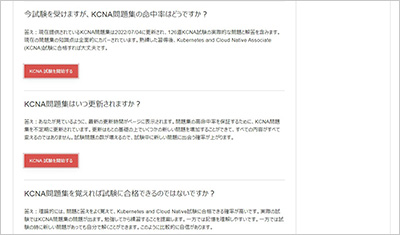
KCNA問題集の収録内容と更新状況はどうなっていますか?

答え:現在提供されているKCNA問題集には、KCNA試験対策に向けた全126問の練習問題と解答が収録されています。Kubernetes and Cloud Native Associate (KCNA)試験に向けた復習に利用できます。

KCNA問題集はいつ更新されますか?

答え:最新の更新日時はページ上部に表示されています。出題範囲の改訂に合わせて、KCNA問題集は継続的に更新されています。更新では既存の基礎の上に新しい問題や改訂内容が反映されます。

KCNA問題集を覚えれば試験に合格できるのではないですか?

答え:問題と解答の選択肢をただ覚えるだけでは十分ではありません。基礎知識を学習したうえでKCNA問題集を練習することを推奨します。背景にある概念を理解しておくことで、応用問題にも対応しやすくなります。

KCNA問題集に解説は付いていますか?

答え:すべての問題集に練習問題と解答が収録されており、一部のThe Linux Foundation科目の設問には解答の下に解説や補足説明が付記されています。理解を深めながら復習を進めるのに役立ちます。

試験の時もKCNA問題集のようにいくつかの答えを選ぶようにヒントを与えますか?

答え:選択問題では指定された数の選択肢を選びます。単に解答の記号を暗記するのではなく、問題文の意図と各選択肢の内容・解説を理解して学習を進めてください。

どうやってKCNA問題集を使って復習しますか?

答え:時間の許す限り、内容を理解しながら計画的に復習することをお勧めします。KCNA問題集の多くの設問と知識ポイントを一度の学習ですべて定着させるのは難しいため、3回に分けて反復する方法が効果的です。1回目は全体を通して解説とあわせて理解し、2回目は分野ごとに自分の言葉で説明できるか確認し、3回目は試験直前に間違えやすい設問を中心に総復習します。

学習時間が限られている場合は、KCNA問題集の選択問題を中心に重要キーワードと正答の根拠を優先して整理してください。また、ドラッグ&ドロップ問題やシミュレーション形式の設問については、手順や前提条件を含めて仕組みを理解しておくことが重要です。

アップデートおよび返金ポリシーについて

1年間の無料アップデート
ご購入日から1年間(365日間)は、KCNA問題集の更新版を追加料金なしでマイページからダウンロードいただけます。

返金ポリシー
返金の条件は返金ポリシーに従います。具体的なお手続きについては、ご注文情報をご用意のうえ、サポート窓口までご連絡ください。

コメントを残す

採点