IT認証試験問題集
GOWUKAKU|IT認定資格の最新の試験問題集(PDF版・無料サンプル問題)を提供しています
 ホームページ / IIBA 問題集  / IIBA-CCA 問題集

IIBA-CCA 問題集 練習問題・模擬試験|日本語版&英語版対応

Certificate in Cybersecurity Analysis (CCA) 試験問題と答案

(0件のカスタマーレビュー)

最終更新日: 2026/10/09  収録内容確認済 | PDF問題集: 全 75 問収録

IIBA-CCA試験対策の学習資料(PDF版:日本語・英語2言語セット)|1年間(365日)無料アップデート付
IIBA-CCA 試験を開始する   
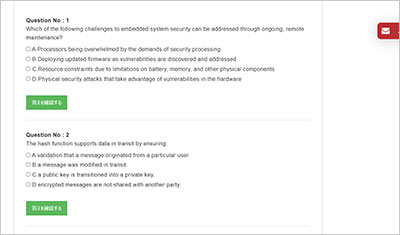
iiba-cca_shiken_1
iiba-cca_shiken_2

IIBA-CCA 問題集 仕様・サポート案内

対象試験 IIBA-CCA — Certificate in Cybersecurity Analysis (CCA)
収録問題数 全 75 問(解答付き/オンライン無料サンプル 25 問公開中)
提供形式・言語 PDF版(日本語版・英語版の2言語セット)
販売価格(税込) 6,880円(税込) ※1回払いの買い切り商品です。自動更新や追加請求はありません。
引き渡し・有効期間 決済完了後すぐにダウンロード可能(日本語版が準備中の科目は、英語版を即時ダウンロードのうえ、日本語版は準備完了次第ご登録メールへ自動送付・有効化されます)。ご購入日から1年間(365日間)無料アップデート対応(期間内の更新版も追加料金なしでダウンロード可能)。
お問い合わせ窓口 メールサポート:[email protected](注文確認・再送・教材に関するご質問|返金・交換条件)

IIBA-CCA サンプル問題プレビュー(抜粋)

収録内容から抜粋したサンプル問題です。「解答・解説を表示」をクリックすると正解を確認できます。

サンプル問題 1: There are three states in which data can exist:

  • A: at dead, in action, in use.
  • B: at dormant, in mobile, in use.
  • C: at sleep, in awake, in use.
  • D: at rest, in transit, in use.
正解:D
Explanation: Data is commonly categorized into three states because the threats and protections change depending on where the data is and what is happening to it. Data at rest is stored on a device or system, such as databases, file shares, endpoints, backups, and cloud storage. The main risks are unauthorized access, theft of storage media, misconfigured permissions, and improper disposal. Controls typically include strong access control, encryption at rest with sound key management, secure configuration and hardening, segmentation, and resilient backup protections including restricted access and immutability. Data in transit is data moving between systems, such as client-to-server traffic, service-to-service connections, API calls, and email routing. The primary risks are interception, alteration, and impersonation through man-in-the-middle techniques. Standard controls include transport encryption (such as TLS), strong authentication and certificate validation, secure network architecture, and monitoring for anomalous connections or data flows. Data in use is actively processed in memory by applications and users, for example when a document is opened, a record is processed by an application, or data is displayed to a user. This state is challenging because data may be decrypted for processing. Controls include least privilege, strong authentication and session management, endpoint protection, application security controls, and secure development practices, with hardware-backed isolation when required

サンプル問題 2: Violations of the EU’s General Data Protection Regulations GDPR can result in:

  • A: mandatory upgrades of the security infrastructure.
  • B: fines of 20 million or 4% of annual turnover, whichever is less.
  • C: fines of 20 million or 4% of annual turnover, whichever is greater.
  • D: a complete audit of the enterprise’s security processes.
正解:C
Explanation: The GDPR establishes a regulatory penalty framework intended to make privacy and data-protection obligations enforceable across organizations of any size. Under GDPR, the most severe administrative fines can reach up to 20 million or up to 4% of the organization’s total worldwide annual turnover of the preceding financial year, whichever is higher. That “whichever is greater” clause is critical: it prevents large enterprises from treating privacy violations as a minor cost of doing business and ensures the sanction can scale with the organization’s economic size and risk impact. Cybersecurity governance and risk documents typically emphasize GDPR as a driver for enterprise risk management because the consequences extend beyond monetary fines. A confirmed violation often triggers regulatory investigations, mandatory corrective actions, and potential restrictions on processing activities. Organizations may also face indirect impacts such as breach notification costs, legal claims from affected individuals, reputational harm, loss of customer trust, and increased oversight by regulators and auditors. From a controls perspective, GDPR penalties reinforce the need for strong security and privacy-by-design practices: data minimization, lawful processing, documented purposes, retention controls, encryption where appropriate, access control and least privilege, monitoring and incident response readiness, and evidence-based accountability through policies, records, and audit trails. Selecting option C correctly reflects GDPR’s maximum fine structure and its risk-based deterrence model.

サンプル問題 3: What privacy legislation governs the use of healthcare data in the United States?

  • A: Privacy Act
  • B: PIPEDA
  • C: HIPAA
  • D: PCI-DSS
正解:C
Explanation: In the United States, HIPAA, the Health Insurance Portability and Accountability Act, is the primary federal framework that governs how certain healthcare information must be protected and used. In cybersecurity and compliance documentation, HIPAA is most often discussed through its implementing rules, especially the Privacy Rule and the Security Rule. The Privacy Rule establishes when protected health information may be used or disclosed and grants individuals rights over their health information. The Security Rule focuses specifically on safeguarding electronic protected health information by requiring administrative, physical, and technical safeguards. From a security controls perspective, HIPAA-driven programs typically include risk analysis and risk management, policies and workforce training, access controls based on least privilege, unique user identification, authentication controls, audit logging, integrity protections, transmission security such as encryption for data in transit, and contingency planning such as backups and disaster recovery. HIPAA also expects organizations to manage third-party risk through appropriate agreements and oversight when vendors handle protected health information. The other options do not fit the question. The Privacy Act generally applies to U.S. federal agencies’ handling of personal records, PIPEDA is a Canadian privacy law, and PCI-DSS is an industry security standard focused on payment card data rather than healthcare data. Therefore, HIPAA is the correct legislation for U.S. healthcare data protection requirements.

GOWUKAKUのIIBA-CCA問題集は、IIBA Certificate in Cybersecurity Analysis (CCA)認定試験の準備に向けた復習用問題集です。IIBA-CCA問題集を使用して出題形式を確認し、知識の定着度を確認しながら復習を進めることができます。

IIBA-CCA問題集を使用する正しい方法

IIBA-CCA問題集を使用する正しい方法:間違いがない、または間違えた場合は、マークを付け、エラーの根本原因を見つけて統合し、習熟するまで確認します。

  • 問題演習は、Cybersecurity Analysis試験に向けた現在の理解度を点検するためのステップです。間違えた設問を分析し、なぜ誤ったのかを確認して知識を定着させることが重要です。

  • IIBA-CCA試験に合格するには、主題の知識と試験のルールを習得する必要があります。そして、質問をせずに本を読んでビデオを見るだけでは、明らかに後者のことはできません。慎重に考えて要約することによってのみ、質問のルールを習得し、半分の労力で2倍の結果を得ることができます。

IIBA-CCA問題集レビューを使用するメリット

IIBA-CCA問題集を使用して、より多くの試験の質問を行うことで研究の問題を見つけてください。そうすれば、より良くなることができます。

  • IIBA-CCA試験の質問に関係することは当然可能です。繰り返しテストされる質問は、頻繁にテストされる質問です。質問に表示されないものは、テストされる可能性が最も低いものです。何度も何度もテストを受ける人は、当然、それを習得するために多くの時間とエネルギーを費やす必要があり、テストをあまり受けない人は、勉強する時間があるまで待つことができます。

  • 質問の結果から、それが正しいかどうかを確認できます。非常に重要なことでも、毎回読む必要はありません。問題が発生し、それが正しく行われていることがわかった場合、それ以上投資する必要はありません。そして、概念と原則の理解に自信があり、それでも問題を解決できない場合でも、それは幻想であり、同様の問題が実際に解決されるまで再試行する必要があることを意味します。

本を読んだりビデオを見たりすることのデメリット

本を読んだりビデオを見たりすることは大きな問題であり、役に立たないかもしれません。多くの人が本を読んだりビデオを見たりして試験の準備をしています。最初から最後まで、何度も見て、効率は高くありません。

  • 出題範囲が広いため、参考書を通読するだけでは重点分野と弱点の区別がつきにくくなります。

  • 参考書を読んで理解したつもりでも、実際にIIBA-CCAの設問形式で問われると解答に迷うケースが少なくありません。

参考書や解説動画も基礎学習には有効ですが、IIBA-CCA試験の直前期には、問題演習で弱点を把握したうえで該当箇所を確認する使い方が効率的です。

間違えて理解できなくなったら、すぐに本に行きましょう。本を読んだりビデオを見たりする場合と比較して、本を検索する利点は、目的がより明確でアクティブになるため、印象がより深く、覚えやすくなることです。

アップデートについて

ご入金後、マイページからIIBA-CCA試験問題集の日本語版と英語版の2言語セット(PDF形式)をダウンロードできます。また、試験範囲の改訂や問題集の更新が行われた場合、ご購入日から1年間(365日間)は更新版を追加料金なしでダウンロードできます。返金の条件は返金ポリシーに従います。

コメントを残す

採点

IIBA