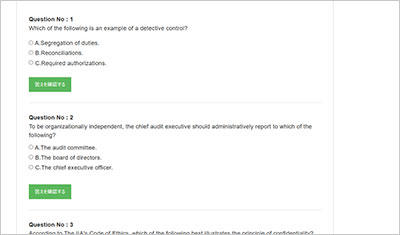
サンプル問題 1: During which stage of an audit engagement would the engagement supervisor identify the tasks that were already completed and the remaining tasks to be performed?
A: When allocating resources.
B: When developing the test approach.
C: When documenting the work program.
正解:C
Explanation: The engagement supervisor identifies tasks that are completed and remaining tasks during the process of documenting the work program. Reference to IIA Standards: According to the IIA's Performance Standards 2200 - Engagement Planning, an internal audit work program should detail the procedures necessary to achieve the engagement's objectives. Standard 2240 - Engagement Work Program explicitly states that internal auditors must develop and document work programs that achieve the objectives of the engagement. Key Responsibilities: Documenting the work program involves listing tasks already performed to avoid redundancy and tasks remaining to ensure coverage of all planned activities. Supervisors are responsible for overseeing this process and ensuring the work aligns with the overall engagement plan. Relevance to Audit Practice: The work program serves as a roadmap for auditors, detailing specific steps to be taken. Identifying completed and pending tasks ensures proper time management and resource allocation during the engagement
サンプル問題 2: Which of the following is the best audit procedure to determine whether all of a bank's loans are backed by sufficient collateral, properly aged as to current payments, and properly categorized as current or noncurrent?
A: Use generalized audit software to read the total loan file, age the file by last payment due, and select a statistical sample stratified by the current and aged population. Examine each loan selected for proper collateralization and aging.
B: Select a block sample of all loans in excess of a specified dollar limit and determine whether they are current and properly categorized. For each loan approved, verify aging and categorization.
C: Select a discovery sample of all loan applications to determine whether each application contains a statement of collateral.
正解:A
Explanation: Reference to IIA Standards: IIA Performance Standard 1220.A2: Internal auditors must consider using technology-based audit techniques and other data analysis tools. Performance Standard 2320 - Analysis and Evaluation: Sufficient and appropriate analysis should be performed to achieve the engagement's objectives. Best Audit Practice for the Scenario: Option A involves using generalized audit software (GAS) to extract relevant data from the loan file and stratify it based on specific criteria (e.g., age of loans, collateral backing). This ensures a statistically valid sample. By examining a stratified sample, the auditor can determine whether each loan is sufficiently collateralized, aged correctly, and categorized properly. This method provides comprehensive coverage while maintaining efficiency and adhering to best practices. Why Other Options Are Less Effective: Option B: A block sample only includes loans over a certain dollar threshold, which introduces a selection bias and overlooks smaller loans, making the sample less representative. Option C: A discovery sample limited to loan applications focuses on documentation compliance (e.g., collateral statements) but does not address loan aging or categorization. Practical Implications: Generalized audit software automates data analysis, reduces manual effort, and increases the reliability of audit conclusions. By selecting a representative statistical sample stratified by population characteristics, auditors gain insights that are applicable to the entire population.
サンプル問題 3: Which of the following situations is most likely to require a compliance engagement from the internal audit activity?
A: An organization must restate its financial statements due to an error in fixed asset valuation.
B: An organization is preparing to launch an enhanced service for its online customer information system.
C: An organization is subject to newly imposed industry health and safety regulations.
正解:C
Explanation: Reference to IIA Standards: Standard 2130 - Governance: Internal audit must assess compliance with applicable laws, regulations, and industry standards. Compliance Auditing: These engagements assess whether the organization adheres to specific rules and regulations. Reasoning: Option C involves newly imposed health and safety regulations, making compliance auditing critical to ensure the organization avoids penalties or operational disruptions. Option A pertains to financial reporting, typically addressed in assurance or financial audits. Option B involves a new service launch, which may require consulting or operational audits but not necessarily compliance-focused.