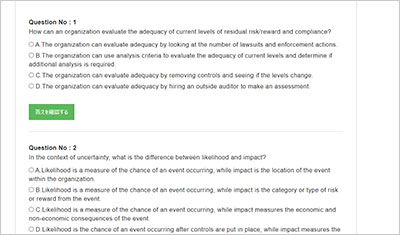
Explanation: GRC stands for Governance, Risk, and Compliance, a critical framework for organizations to ensure they operate ethically and effectively while adhering to laws, regulations, and industry standards. Governance: Refers to the organization's leadership, policies, and procedures that guide its activities to align with business objectives, ethical practices, and compliance requirements. Effective governance ensures strategic alignment and accountability. Risk: Encompasses identifying, assessing, managing, and mitigating risks that could impede the organization's objectives. This includes financial risks, operational risks, cybersecurity threats, and reputational risks. Compliance: Involves adhering to laws, regulations, industry standards, and internal policies. Compliance ensures that the organization fulfills external and internal obligations to maintain trust and avoid legal penalties. Reference: NIST Risk Management Framework (RMF): Emphasizes integrating GRC principles into risk assessment and management. COSO Framework: Offers detailed guidance on governance and internal control processes. ISO 31000 (Risk Management): Explains systematic risk management practices aligning with GRC objectives. Compliance documentation, such as GDPR for privacy and SOX for financial controls, highlights the importance of GRC in maintaining ethical and lawful operations
サンプル問題 2: What is the essence or the central meaning of GRC?
A: A connected and integrated approach that provides a pathway to Principled Performance by overcoming VUCA and disconnection
B: A system for monitoring and evaluating the performance of employees and teams
C: A set of guidelines and regulations for corporate governance and ethical conduct
D: A framework for managing financial risks and ensuring fiscal responsibility
正解:A
Explanation: The essence of GRC (Governance, Risk, and Compliance) lies in creating a connected and integrated approach that enables organizations to achieve their goals through Principled Performance while managing uncertainty and fostering ethical operations. Pathway to Principled Performance: GRC focuses on achieving a balance between objectives, risks, and compliance in a manner that aligns with ethical practices and organizational values. Overcoming VUCA: VUCA stands for Volatility, Uncertainty, Complexity, and Ambiguity, which are common challenges in modern organizational environments. GRC integrates processes, communication, and systems to navigate these challenges effectively. Avoiding Disconnection: Disconnection in governance, risk management, and compliance activities can lead to inefficiency, misaligned objectives, and increased vulnerability. GRC ensures seamless integration and collaboration across departments. Reference: OCEG’s GRC Capability Model: Highlights how GRC helps achieve Principled Performance by harmonizing governance, risk, and compliance with organizational goals. COSO and ISO 31000 Frameworks: Stress the importance of connected approaches for better risk management and performance outcomes.
サンプル問題 3: What is the difference between an organization that is being "Good" and being a "Principled Performer"?
A: An organization must measure up to the Principled Performance definition to be a "Principled Performer," regardless of whether its objectives are subjectively perceived or preferred as "Good" or "Bad."
B: A "Principled Performer" always pursues objectives that are considered "Good" by society.
C: There is no difference: "Good" and a "Principled Performer" are synonymous.
D: A "Principled Performer" is an organization that donates a significant portion of its profits to charity.
正解:A
Explanation: The distinction between being "Good" and being a "Principled Performer" lies in the approach and framework used to meet objectives, irrespective of whether the objectives are considered "good" or "bad" by society. "Good" vs. "Principled Performer": "Good" is a subjective measure based on societal norms, values, or preferences. A "Principled Performer", however, aligns its objectives and operations with ethical practices, risk management, compliance, and governance, irrespective of societal perceptions. Definition of a Principled Performer: The term originates from OCEG's Principled Performance model, which emphasizes the achievement of objectives with integrity, accountability, and foresight. Organizations that ensure their processes and decisions meet defined principles of performance, even under external pressures, qualify as "Principled Performers." Misconceptions Debunked: Option B is incorrect because "Principled Performers" do not necessarily align with what society perceives as "Good." Option C is incorrect as it equates two fundamentally different concepts. Option D is irrelevant, as charity is not a determining factor of principled performance. Reference: OCEG’s GRC Capability Model: Defines the characteristics of Principled Performance and how it differs from subjective notions of "Good." Ethics and Compliance Standards (ISO 37301): Demonstrates the operationalization of principles within organizations. NIST RMF and COSO ERM Frameworks: Discuss how principled approaches are embedded into risk and governance processes.