

GOWUKAKU|IT認定資格の最新の試験問題集(PDF版・無料サンプル問題)を提供しています
PECB Certified Data Protection Officer 試験問題と答案
最終更新日: 2026/10/15 収録内容確認済 | PDF問題集: 全 80 問収録
GDPR試験対策の学習資料(PDF版:日本語・英語2言語セット)|1年間(365日)無料アップデート付
| 対象試験 | PECB GDPR — PECB Certified Data Protection Officer |
|---|---|
| 収録問題数 | 全 80 問(解答付き/オンライン無料サンプル 30 問公開中) |
| 提供形式・言語 | PDF版(日本語版・英語版の2言語セット) |
| 販売価格(税込) | 6,880円(税込) ※1回払いの買い切り商品です。自動更新や追加請求はありません。 |
| 引き渡し・有効期間 | 決済完了後すぐにダウンロード可能(日本語版が準備中の科目は、英語版を即時ダウンロードのうえ、日本語版は準備完了次第ご登録メールへ自動送付・有効化されます)。ご購入日から1年間(365日間)無料アップデート対応(期間内の更新版も追加料金なしでダウンロード可能)。 |
| お問い合わせ窓口 | メールサポート:[email protected](注文確認・再送・教材に関するご質問|返金・交換条件) |
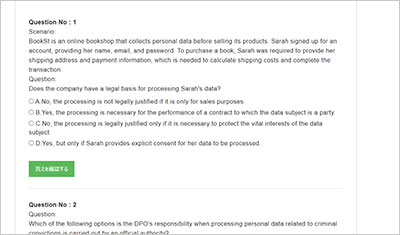
収録内容から抜粋したサンプル問題です。「解答・解説を表示」をクリックすると正解を確認できます。
サンプル問題 1: Scenario 1: MED is a healthcare provider located in Norway. It provides high-quality and affordable healthcare services, including disease prevention, diagnosis, and treatment. Founded in 1995, MED is one of the largest health organizations in the private sector. The company has constantly evolved in response to patients' needs. Patients that schedule an appointment in MED's medical centers initially need to provide their personal information, including name, surname, address, phone number, and date of birth. Further checkups or admission require additional information, including previous medical history and genetic data. When providing their personal data, patients are informed that the data is used for personalizing treatments and improving communication with MED's doctors. Medical data of patients, including children, are stored in the database of MED's health information system. MED allows patients who are at least 16 years old to use the system and provide their personal information independently. For children below the age of 16, MED requires consent from the holder of parental responsibility before processing their data. MED uses a cloud-based application that allows patients and doctors to upload and access information. Patients can save all personal medical data, including test results, doctor visits, diagnosis history, and medicine prescriptions, as well as review and track them at any time. Doctors, on the other hand, can access their patients' data through the application and can add information as needed. Patients who decide to continue their treatment at another health institution can request MED to transfer their data. However, even if patients decide to continue their treatment elsewhere, their personal data is still used by MED. Patients’ requests to stop data processing are rejected. This decision was made by MED’s top management to retain the information of everyone registered in their databases. The company also shares medical data with InsHealth, a health insurance company. MED's data helps InsHealth create health insurance plans that meet the needs of individuals and families. MED believes that it is its responsibility to ensure the security and accuracy of patients’ personal data. Based on the identified risks associated with data processing activities, MED has implemented appropriate security measures to ensure that data is securely stored and processed. Since personal data of patients is stored and transmitted over the internet, MED uses encryption to avoid unauthorized processing, accidental loss, or destruction of data. The company has established a security policy to define the levels of protection required for each type of information and processing activity. MED has communicated the policy and other procedures to personnel and provided customized training to ensure proper handling of data processing. Question: If a patient requests MED to permanently erase their data, MED should:
サンプル問題 2: Scenario 1: MED is a healthcare provider located in Norway. It provides high-quality and affordable healthcare services, including disease prevention, diagnosis, and treatment. Founded in 1995, MED is one of the largest health organizations in the private sector. The company has constantly evolved in response to patients' needs. Patients that schedule an appointment in MED's medical centers initially need to provide their personal information, including name, surname, address, phone number, and date of birth. Further checkups or admission require additional information, including previous medical history and genetic data. When providing their personal data, patients are informed that the data is used for personalizing treatments and improving communication with MED's doctors. Medical data of patients, including children, are stored in the database of MED's health information system. MED allows patients who are at least 16 years old to use the system and provide their personal information independently. For children below the age of 16, MED requires consent from the holder of parental responsibility before processing their data. MED uses a cloud-based application that allows patients and doctors to upload and access information. Patients can save all personal medical data, including test results, doctor visits, diagnosis history, and medicine prescriptions, as well as review and track them at any time. Doctors, on the other hand, can access their patients' data through the application and can add information as needed. Patients who decide to continue their treatment at another health institution can request MED to transfer their data. However, even if patients decide to continue their treatment elsewhere, their personal data is still used by MED. Patients’ requests to stop data processing are rejected. This decision was made by MED’s top management to retain the information of everyone registered in their databases. The company also shares medical data with InsHealth, a health insurance company. MED's data helps InsHealth create health insurance plans that meet the needs of individuals and families. MED believes that it is its responsibility to ensure the security and accuracy of patients’ personal data. Based on the identified risks associated with data processing activities, MED has implemented appropriate security measures to ensure that data is securely stored and processed. Since personal data of patients is stored and transmitted over the internet, MED uses encryption to avoid unauthorized processing, accidental loss, or destruction of data. The company has established a security policy to define the levels of protection required for each type of information and processing activity. MED has communicated the policy and other procedures to personnel and provided customized training to ensure proper handling of data processing. Question: Based on scenario 1, is the processing of children's personal data performed by MED in compliance with GDPR?
サンプル問題 3: Scenario 1: MED is a healthcare provider located in Norway. It provides high-quality and affordable healthcare services, including disease prevention, diagnosis, and treatment. Founded in 1995, MED is one of the largest health organizations in the private sector. The company has constantly evolved in response to patients' needs. Patients that schedule an appointment in MED's medical centers initially need to provide their personal information, including name, surname, address, phone number, and date of birth. Further checkups or admission require additional information, including previous medical history and genetic data. When providing their personal data, patients are informed that the data is used for personalizing treatments and improving communication with MED's doctors. Medical data of patients, including children, are stored in the database of MED's health information system. MED allows patients who are at least 16 years old to use the system and provide their personal information independently. For children below the age of 16, MED requires consent from the holder of parental responsibility before processing their data. MED uses a cloud-based application that allows patients and doctors to upload and access information. Patients can save all personal medical data, including test results, doctor visits, diagnosis history, and medicine prescriptions, as well as review and track them at any time. Doctors, on the other hand, can access their patients' data through the application and can add information as needed. Patients who decide to continue their treatment at another health institution can request MED to transfer their data. However, even if patients decide to continue their treatment elsewhere, their personal data is still used by MED. Patients’ requests to stop data processing are rejected. This decision was made by MED’s top management to retain the information of everyone registered in their databases. The company also shares medical data with InsHealth, a health insurance company. MED's data helps InsHealth create health insurance plans that meet the needs of individuals and families. MED believes that it is its responsibility to ensure the security and accuracy of patients’ personal data. Based on the identified risks associated with data processing activities, MED has implemented appropriate security measures to ensure that data is securely stored and processed. Since personal data of patients is stored and transmitted over the internet, MED uses encryption to avoid unauthorized processing, accidental loss, or destruction of data. The company has established a security policy to define the levels of protection required for each type of information and processing activity. MED has communicated the policy and other procedures to personnel and provided customized training to ensure proper handling of data processing. Question: Considering the nature of data processing activities described in scenario 1, is GDPR applicable to MED?
試験はこの世界で成功しやすいことの一つです。試験は前もって範囲を教えていますから、復習はこの範囲内の自分ができないところを探し続けています。GOWUKAKUはGDPR問題集を用いたGDPR(PECB Certified Data Protection Officer)試験の復習方法を案内しています。
一般的には、私たちが復習する習慣は、最初のページから読んで、知識ポイントごとに、公式ごとに記憶しようとするものです。この章を勉強してから、テーマを作って自分の状況をテストします。このように繰り返して、発見しましたか?私たちは入力する時に記憶することに慣れています。しかし、今GOWUKAKUは全く違った方法をお勧めします。
復習段階は、初めて本を読む時:
1 本を通読して、記憶しなくてもいいです。目的は前に習った内容をもう一度知ることです。
2 同時に、前の本に書いたポイントに注目して、自分が思っている新しいポイントをマークします。
このステップは、GDPR問題集における練習問題の演習と組み合わせて行うことができます。GDPR試験の題型と範囲、及び知識点の考察方法を研究します。
もうちょっと詳しく話し、私達の普段の習慣は直接に主次の勉強と知識点を区別しないです。でも、GOWUKAKUのGDPR問題集に収録された問題を通じて、試験範囲で問われる知識ポイントを整理します。
参考書を読み、要点をマークし、問題集の設問と解説を確認します。知識のポイントに沿ってGDPR問題集の関連設問と解答を整理し、参考書の該当箇所と照らし合わせながら理解を深めます(一部の設問には解答の下に解説が付記されています)。
これは最初のレビューですが、暗記する必要はなく、理解するだけなので、実際には非常に高速です。
そして第二ステップに進みます
GDPR問題集を使って、本を読まないで、中の問題に答えます。一回目なので、あまり詳しくないです。本をめくる必要があります。似たような経験をしたことがある人なら、「全く思い出せないので、本をめくりに行きました。記憶効果が意外にいいです」ということが分かります。
知識ポイントがある本の位置は、記憶にとって大きな助けになります。GDPR問題集の出題テーマに沿って、提示された答えのあるページは記憶を絶えず強化していくほうがいいです。
さらに、各問題の後に、答えの手がかりと自分の習熟度を書き留めることもできます。 この「質問-回答-レビュー」プロセスは、習熟するまで実行できます。
要するに、このプロセスの本質は、入力中に記憶して適用する前のプロセスを放棄することですが、「出力のプロセスで学習、記憶、適用する」ことによって直接、1つのステップが実行され、効率が高くなります。
GDPR問題集を使って、自分の学習効果を評価します。試験の思考で勉強しています。学習の思考で勉強しています。
以上がGDPR問題集を活用したPECB Privacy And Data Protection試験の復習手順です。
ご入金後、マイページからGDPR試験問題集の日本語版と英語版の2言語セット(PDF形式)をダウンロードできます。また、試験範囲の改訂や問題集の更新が行われた場合、ご購入日から1年間(365日間)は更新版を追加料金なしでダウンロードできます。返金の条件は返金ポリシーに従います。