サンプル問題 1: A risk manager is reviewing the hospital’s incident reporting system and notices that very few medication errors are being reported despite known high volumes of medication administration. Which of the following is the MOST appropriate action?
A: Discipline staff members for failure to report errors.
B: Conduct a root cause analysis on the reporting system.
C: Assess the organizational culture and barriers to reporting.
D: Notify the liability insurer immediately.
正解:C
Explanation: Within Health Care Risk Management frameworks supported by ASHRM and the American Hospital Association Certification Center, effective incident reporting systems depend heavily on organizational culture. When underreporting is identified, the most appropriate first step is to evaluate whether a just culture exists and whether staff perceive reporting as safe, nonpunitive, and constructive. Fear of retaliation, lack of feedback, time constraints, and unclear reporting procedures are common barriers that suppress reporting rates. A punitive response such as disciplining staff may further discourage transparency and undermine patient safety initiatives. Conducting a root cause analysis may be appropriate if a specific adverse event occurred, but in this scenario the systemic issue is underreporting itself, which is primarily cultural and operational in nature. Immediate notification of the liability insurer would not address the underlying safety system weakness. Health care operations objectives emphasize creating a culture of safety that encourages voluntary reporting, learning, and system improvement. By assessing and strengthening reporting culture, leadership can improve data accuracy, enhance early risk identification, and support proactive patient safety management.
サンプル問題 2: A hold-harmless agreement is an important component of which of the following aspects of a risk financing program?
A: risk transfer
B: risk retention
C: first-party liability insurance
D: third-party liability insurance
正解:A
Explanation: Within Health Care Risk Management frameworks established by ASHRM and the American Hospital Association Certification Center, risk financing strategies include risk retention, risk transfer, and insurance mechanisms. A hold-harmless agreement is a contractual provision in which one party agrees to assume responsibility for certain liabilities and to protect another party from claims or losses arising from specified activities. This mechanism is a classic example of risk transfer. Through hold-harmless or indemnification clauses, an organization shifts potential financial responsibility for loss to another party, often a contractor, vendor, or service provider. This contractual allocation of liability reduces the organization’s exposure without necessarily purchasing insurance. It is therefore categorized under noninsurance risk transfer. Risk retention, by contrast, involves assuming and financing losses internally, such as through self-insurance or deductibles. First-party liability insurance addresses losses sustained directly by the insured organization, while third-party liability insurance covers claims made by others against the organization. Although insurance is also a method of risk transfer, the specific instrument described in the question is a contractual transfer mechanism rather than an insurance product. Accordingly, a hold-harmless agreement is most directly associated with risk transfer within a comprehensive risk financing program.
サンプル問題 3: An emergency department physician has evaluated and stabilized a patient who needs a sign language interpreter. The on-call physician is consulted for admission. Which of the following regulatory laws are most relevant?
A: ADA and EMTALA/COBRA
B: HCQIA and ADA
C: EMTALA/COBRA and HIPAA
D: HIPAA and HCQIA
正解:A
Explanation: Under Health Care Risk Management standards supported by ASHRM and the American Hospital Association Certification Center, two federal laws are most directly implicated in this scenario: the Americans with Disabilities Act ADA and the Emergency Medical Treatment and Labor Act EMTALA, formerly enacted under COBRA. EMTALA requires hospitals with emergency departments to provide an appropriate medical screening examination, stabilization of emergency medical conditions, and appropriate transfer or admission regardless of ability to pay. Since the emergency physician has evaluated and stabilized the patient and the on-call physician is being consulted for admission, EMTALA obligations remain central to ensuring compliant continuation of care. The ADA is also directly relevant because it mandates that health care organizations provide reasonable accommodations to individuals with disabilities, including effective communication. For a patient requiring a sign language interpreter, the hospital must provide appropriate auxiliary aids and services to ensure meaningful access to care. HIPAA relates primarily to privacy and protected health information, while HCQIA addresses peer review immunity and credentialing matters. Therefore, ADA and EMTALA are the most relevant regulatory frameworks in this case.
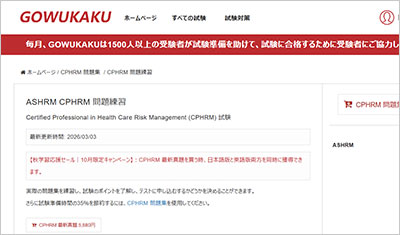
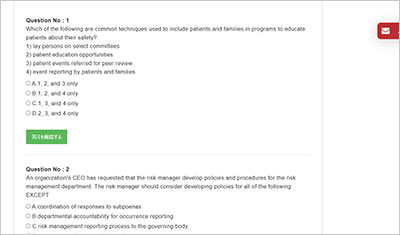
GOWUKAKUのCPHRM問題集は、ASHRM Certified Professional in Health Care Risk Management (CPHRM)認定試験の準備に向けた復習用問題集です。CPHRM問題集を使用して出題形式を確認し、知識の定着度を確認しながら復習を進めることができます。