サンプル問題 1: Contract management means the actions of a contract manager to _________.
A: receive offers, evaluate offers, and to assess performance
B: ensure requirements are properly developed, fulfilled, and paid for
C: develop solicitations, develop offers, form contracts, perform contracts, and close contracts
D: develop market research strategies to ensure the best product or service is delivered to the right place at the right time
正解:C
Explanation: The correct answer is C because NCMA’s official definition of contract management states that it is “the actions of a contract manager to develop solicitations, develop offers, form contracts, perform contracts, and close contracts.” This definition appears in the ANSI/NCMA Contract Management Standard, which NCMA identifies as the foundation and framework for the CMBOK. Option C is therefore the exact standards-based lifecycle view of contract management. It covers the full sequence of activities across the contract life cycle: pre-award activities such as solicitation and offer development, the award activity of forming the contract, and post-award activities including contract performance and contract closeout. That full-life-cycle structure is also reflected in NCMA’s framework, which organizes contract management around pre-award, award, and post-award phases. Option B may sound familiar because NCMA also describes the broader purpose of contract management as ensuring that requirements are properly developed, fulfilled, and paid for, but that wording is not the formal definition asked in this question. Option A is incomplete because it omits major lifecycle functions such as solicitation development, contract formation, and closeout. Option D focuses on market research and supply considerations, which are narrower procurement activities rather than the complete NCMA definition of contract management
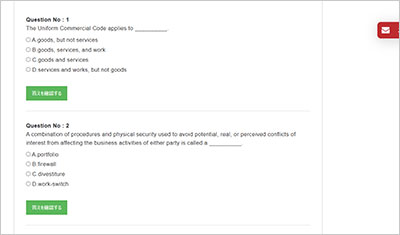
サンプル問題 2: For a contract to be __________, both parties must indicate that they agree to the terms.
A: valid
B: completed
C: verified
D: binding
正解:D
Explanation: The correct answer is D (binding) because, under contract management principles aligned with the NCMA Contract Management Standard and CMBOK framework, a contract becomes enforceable when both parties mutually agree to its terms. This mutual agreement is commonly referred to as “mutual assent” or “meeting of the minds,” which is a fundamental element required to create a legally binding contract. A binding contract means that both parties have expressed their acceptance of the terms, typically through signatures or other formal acknowledgment, and are therefore legally obligated to perform their respective duties. Without this agreement, the contract cannot be enforced, even if other elements such as offer or consideration exist. Option A (valid) may seem correct, but validity includes multiple elements such as legal capacity, consideration, lawful purpose, and mutual assent. Agreement alone does not fully define validity. Option B (completed) refers to the fulfillment of contractual obligations, which occurs after performance, not at the formation stage. Option C (verified) is not a standard legal or CMBOK term related to contract formation. Thus, within the CMBOK lifecycle perspective, establishing a binding agreement is a critical step in the award phase, ensuring that both parties are committed and accountable under the contract terms.
サンプル問題 3: An __________ contract is one in which the contract terms are stated in either written or spoken words and are assented to by both parties.
A: quasi
B: express
C: implied
D: unilateral
正解:B
Explanation: The correct answer is B (express) because an express contract is defined as a contract in which the terms are explicitly communicated between the parties, either orally or in writing, and both parties clearly agree to those terms. This aligns with foundational contract principles reflected in the NCMA Contract Management Standard and CMBOK, particularly within the contract formation process during the pre-award and award phases. In an express contract, all essential elements―such as offer, acceptance, and consideration―are clearly articulated, leaving little ambiguity regarding the obligations of each party. This clarity is critical in contract management because it reduces the risk of disputes, enhances enforceability, and supports effective performance management during the post-award phase. Option A (quasi contract) is not a true contract but a legal construct imposed by courts to prevent unjust enrichment when no formal agreement exists. Option C (implied contract) is formed through the actions or conduct of the parties rather than explicit words, making it less direct than an express contract. Option D (unilateral contract) involves a promise in exchange for performance and does not necessarily require mutual verbal or written agreement at the outset. Therefore, an express contract best fits the definition provided, as it involves clearly stated terms and mutual assent, which are key principles emphasized in CMBOK contract formation practices.
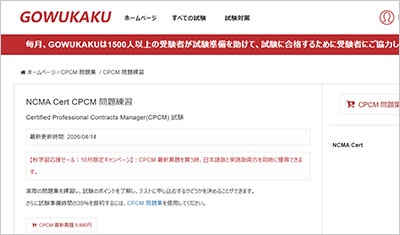
CPCM問題集による問題演習は、Certified Professional Contracts Manager試験の復習に利用できます。参考書を読むだけでなく、実際に問題を解くことで理解度を確認できます。