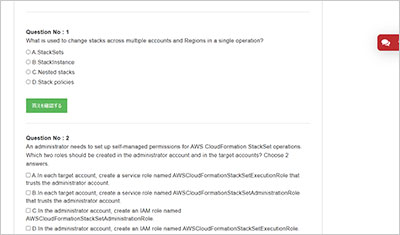
サンプル問題 1: Which CloudWatch metric filter includes log events with the word ERROR but excludes log events with the word WARNING?
A: ?ERROR ?WARN
B: "ERROR" WARN
C: ERROR -WARN
D: ERROR WARN
正解:C
Explanation: A metric filter in Amazon CloudWatch Logs can be used to search for specific terms in log data and create metrics based on the matches. To include log events with the word "ERROR" and exclude those with the word "WARNING," the correct syntax involves using a filter pattern with a positive match for "ERROR" and a negation for "WARNING." The correct pattern is "ERROR -WARN," where the minus sign (-) indicates exclusion of log events containing "WARN." According to the WGU Cloud Deployment and Operations Study Guide (Section 4.2, CloudWatch Logs), metric filters use a pattern-based syntax where terms are included or excluded using positive matches and the negation operator (-). This ensures that only logs with "ERROR" and without "WARN" are processed into the metric
サンプル問題 2: Which AWS solution can send email based on CloudWatch alarms?
A: Simple Queue Service (SQS
B: Simple Notification Service (SNS
C: Amplify
D: Kinesis
正解:B
Explanation: Amazon CloudWatch alarms can trigger notifications when a metric breaches a defined threshold. The AWS solution designed to send emails based on these alarms is Amazon Simple Notification Service (SNS). SNS supports sending notifications via email, SMS, and other protocols when subscribed endpoints are triggered by CloudWatch alarms. The WGU Cloud Deployment and Operations Study Guide (Section 4.3, Monitoring and Alarms) states that SNS is the primary service for delivering notifications from CloudWatch, allowing users to configure email subscriptions for alarm states. Other options like SQS, Amplify, and Kinesis are not designed for this purpose.
サンプル問題 3: How are custom metrics grouped in CloudWatch?
A: Namespace
B: Service
C: Date
D: Value
正解:A
Explanation: In Amazon CloudWatch, custom metrics are organized and grouped using namespaces. A namespace is a container for CloudWatch metrics that allows you to isolate and categorize metrics from different applications or services. According to the WGU Cloud Deployment and Operations Study Guide (Section 4.1, CloudWatch Metrics), each custom metric must be assigned to a namespace, which acts as a unique identifier to prevent naming collisions and facilitate metric management. Options like Service, Date, and Value are not used for grouping metrics in this context.
WGU Cloud Deployment and Operations試験の準備に向けた復習資料としてCloud Deployment and Operations問題集を提供しています。WGUCloud Deployment and Operations試験の主要な知識ポイントをカバーしています。ページ上部の「Cloud Deployment and Operations 試験を開始する」ボタンからオンライン無料サンプル問題を確認できます。
Cloud Deployment and Operations問題集の収録内容と更新状況はどうなっていますか?
答え:現在提供されているCloud Deployment and Operations問題集には、Cloud Deployment and Operations試験対策に向けた全67問の練習問題と解答が収録されています。WGUCloud Deployment and Operations試験に向けた復習に利用できます。
どうやってCloud Deployment and Operations問題集を使って復習しますか?
答え:時間の許す限り、内容を理解しながら計画的に復習することをお勧めします。Cloud Deployment and Operations問題集の多くの設問と知識ポイントを一度の学習ですべて定着させるのは難しいため、3回に分けて反復する方法が効果的です。1回目は全体を通して解説とあわせて理解し、2回目は分野ごとに自分の言葉で説明できるか確認し、3回目は試験直前に間違えやすい設問を中心に総復習します。
学習時間が限られている場合は、Cloud Deployment and Operations問題集の選択問題を中心に重要キーワードと正答の根拠を優先して整理してください。また、ドラッグ&ドロップ問題やシミュレーション形式の設問については、手順や前提条件を含めて仕組みを理解しておくことが重要です。