IT認証試験問題集
GOWUKAKU|IT認定資格の最新の試験問題集(PDF版・無料サンプル問題)を提供しています
 ホームページ / HRPA 問題集  / CHRP-KE 問題集

HRPA CHRP-KE 問題集 練習問題・模擬試験|日本語版&英語版対応

CHRP Knowledge Exam 試験問題と答案

(0件のカスタマーレビュー)

最終更新日: 2026/10/17  収録内容確認済 | PDF問題集: 全 176 問収録

CHRP-KE試験対策の学習資料(PDF版:日本語・英語2言語セット)|1年間(365日)無料アップデート付

CHRP-KE 試験を開始する   
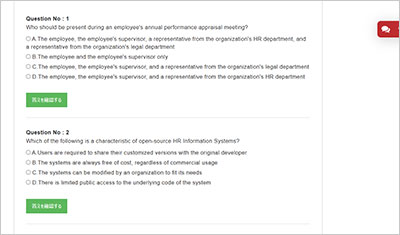
chrp-ke_shiken_1
chrp-ke_shiken_2

CHRP-KE 問題集 仕様・サポート案内

対象試験 HRPA CHRP-KE — CHRP Knowledge Exam
収録問題数 全 176 問(解答付き/オンライン無料サンプル 65 問公開中)
提供形式・言語 PDF版(日本語版・英語版の2言語セット)
販売価格(税込) 6,880円(税込) ※1回払いの買い切り商品です。自動更新や追加請求はありません。
引き渡し・有効期間 決済完了後すぐにダウンロード可能(日本語版が準備中の科目は、英語版を即時ダウンロードのうえ、日本語版は準備完了次第ご登録メールへ自動送付・有効化されます)。ご購入日から1年間(365日間)無料アップデート対応(期間内の更新版も追加料金なしでダウンロード可能)。
お問い合わせ窓口 メールサポート:[email protected](注文確認・再送・教材に関するご質問|返金・交換条件)

CHRP-KE サンプル問題プレビュー(抜粋)

収録内容から抜粋したサンプル問題です。「解答・解説を表示」をクリックすると正解を確認できます。

サンプル問題 1: What are 3 ways to modify a total rewards structure to respond to financial challenges facing an organization?

  • A: Replace fixed pay with variable pay, conduct a market analysis, and replace pay raises with bonuses
  • B: Create a 2-tiered pay system, conduct a market analysis, and replace pay raises with bonuses
  • C: Create a 2-tiered pay system, replace fixed pay with variable pay, and replace pay raises with bonuses
  • D: Enact a hiring freeze, create a 2-tiered pay system, and replace fixed pay with variable pay
正解:C
Explanation: According to the HRPA Human Resources Competency Framework (Functional Domain: Total Rewards) and the CHRP Knowledge Exam Blueprint, certified HR professionals must demonstrate the ability to design, assess, and modify total rewards programs to align with organizational strategy, financial realities, and workforce needs. When an organization faces financial challenges, HR professionals are expected to implement cost-effective compensation strategies while maintaining internal equity, engagement, and performance alignment. The three modifications listed in option C directly reflect these principles: Create a Two-Tiered Pay System This approach introduces separate pay or benefit structures for new versus existing employees. It allows the organization to manage long-term costs while maintaining fairness and compliance. Extract from HRPA Competency Framework C Total Rewards: “HR professionals analyze and adapt compensation systems to ensure sustainability, equity, and responsiveness to business conditions.” (Key Competency: Design and Adapt Total Rewards Systems C CHRP Level) Replace Fixed Pay with Variable Pay Shifting from fixed salary increases to performance-based or results-based pay links employee rewards to measurable performance outcomes and organizational success. This introduces flexibility during budget constraints. Extract from HRPA Competency Framework C Total Rewards: “Implements performance-linked reward mechanisms that align employee contributions with business outcomes and financial capacity.” (Behavioural Indicator: Implements Variable Compensation Models Tied to Business Performance C CHRP Level) Replace Pay Raises with Bonuses Bonuses are temporary and do not increase base salary, helping the organization manage payroll expenses. This maintains motivation without committing to permanent cost increases. Extract from HRPA Competency Framework C Total Rewards: “Applies compensation strategies that optimize cost management and engagement through contingent or one-time payments.” (Knowledge Area: Compensation Strategy and Cost Management C Total Rewards Domain) Together, these strategies reflect an HR professional’s ability to maintain organizational competitiveness and fiscal responsibility, consistent with the CHRP-level behavioural indicators within HRPA’s Total Rewards domain. Verified Reference Summary (HRPA Frameworks and Study Materials): HRPA Human Resources Competency Framework C Functional Domain: Total Rewards CHRP Knowledge Exam Blueprint (HRPA, Ontario) HRPA Exam Preparation Guide C Total Rewards Section HRPA Professional Competency Descriptions C CHRP Level, Total Rewards

サンプル問題 2: Which of the following development opportunities enhances the knowledge and skills of employees to perform future job responsibilities?

  • A: Apprenticeship
  • B: Stretch assignments
  • C: Job instruction training
  • D: Performance aids
正解:B
Explanation: According to the HRPA Human Resources Competency Framework (Functional Domain: Learning and Development) and the CHRP Knowledge Exam Blueprint, the goal of Learning and Development (L&D) is to enhance individual and organizational capability by equipping employees with the knowledge, skills, and abilities (KSAs) required for both current and future organizational needs. The distinction between training and development is essential: Training focuses on improving performance in current roles. Development prepares employees for future responsibilities and broader organizational contributions. Among the options provided: Apprenticeship Apprenticeships combine classroom instruction with on-the-job training for a specific trade or technical skill. While effective for current job skill development, they are not primarily intended for preparing employees for future or higher-level responsibilities. Stretch Assignments Stretch assignments involve giving employees challenging tasks or projects beyond their current job scope to build readiness for more complex roles. They are a key tool for career development and succession planning, helping employees acquire skills necessary for future responsibilities. Extract from HRPA Competency Framework C Learning and Development: “Facilitates developmental opportunities such as coaching, mentoring, and stretch assignments to prepare employees for future organizational roles.” (Key Competency: Design and Implement Development Strategies C CHRP Level) Therefore, stretch assignments directly enhance employee capability for future job responsibilities. Job Instruction Training (JIT) A structured method that teaches employees the step-by-step process of performing their current job tasks efficiently and safely. Extract: “Implements structured instructional methods to enhance current role performance.” (Knowledge Area: Training Delivery and Facilitation C HRPA Framework) Focus: current job performance, not future development. Performance Aids Tools or resources (e.g., checklists, reference guides) used to assist employees while performing current tasks. These support on-the-job performance rather than developmental learning. Thus, based on HRPA’s competencies and behavioural indicators under Learning and Development, stretch assignments (Option B) are the correct response, as they directly address development for future roles and responsibilities. Verified Reference Summary (HRPA Frameworks and Study Materials): HRPA Human Resources Competency Framework C Functional Domain: Learning and Development CHRP Knowledge Exam Blueprint (HRPA, Ontario) HRPA Exam Preparation Guide C Learning and Development Section HRPA Professional Competency Descriptions C CHRP Level, Learning and Development Domain

サンプル問題 3: Which method establishes pay equity when no comparator male job class exists by extrapolating a hypothetical male comparator job class based on other male job classes?

  • A: Permissible differences
  • B: Job-to-job
  • C: Proportional value
  • D: Proxy comparison
正解:C
Explanation: Under the HRPA Human Resources Competency Framework (Functional Domain: Total Rewards) and in alignment with Ontario’s Pay Equity Act, HR professionals must understand and apply legislated pay equity methods to ensure equitable compensation between female and male job classes performing work of equal or comparable value. The Pay Equity Act (Ontario) defines three methods for establishing pay equity: Job-to-Job Comparison Used when both male and female job classes exist. Female job classes are compared directly to male job classes of equal value to identify pay gaps. Extract: “Job-to-job comparisons directly match female and male job classes performing work of equal value.” (HRPA Total Rewards Knowledge Area: Compensation Equity and Compliance) Proportional Value Comparison Used when there are insufficient or no direct male comparator job classes. This method extrapolates a hypothetical male comparator by analyzing the relationship between job value and pay rates among existing male job classes, then applying that relationship to female job classes. Extract: “The proportional value method establishes pay equity when a direct male comparator does not exist by extrapolating a male reference rate using existing male job data.” (HRPA Competency Framework C Total Rewards, Pay Equity and Compensation Analysis, CHRP Level) Proxy Comparison Applies only to the public sector, where there are no male job classes at all. Uses job data from a comparable organization with male job classes to establish equity. Permissible Differences Refers to legally acceptable pay differences (e.g., seniority, merit, skill shortages) that do not constitute pay equity violations. Therefore, the correct answer is C. Proportional value, as it specifically applies when no direct male comparator job class exists within the organization and relies on extrapolated data from other male job classes. Verified Reference Summary (HRPA Frameworks and Study Materials): HRPA Human Resources Competency Framework C Functional Domain: Total Rewards CHRP Knowledge Exam Blueprint (HRPA, Ontario) Pay Equity Act (Ontario) C Sections 5C6, Methods of Comparison HRPA Exam Preparation Guide C Pay Equity and Compensation Compliance

GOWUKAKUのCHRP-KE問題集は、HRPA CHRP Knowledge Exam認定試験の準備に向けた復習用問題集です。CHRP-KE問題集を使用して出題形式を確認し、知識の定着度を確認しながら復習を進めることができます。

CHRP-KE問題集を使用する正しい方法

CHRP-KE問題集を使用する正しい方法:間違いがない、または間違えた場合は、マークを付け、エラーの根本原因を見つけて統合し、習熟するまで確認します。

  • 問題演習は、Certified Human Resources Professional試験に向けた現在の理解度を点検するためのステップです。間違えた設問を分析し、なぜ誤ったのかを確認して知識を定着させることが重要です。

  • CHRP-KE試験に合格するには、主題の知識と試験のルールを習得する必要があります。そして、質問をせずに本を読んでビデオを見るだけでは、明らかに後者のことはできません。慎重に考えて要約することによってのみ、質問のルールを習得し、半分の労力で2倍の結果を得ることができます。

CHRP-KE問題集レビューを使用するメリット

CHRP-KE問題集を使用して、より多くの試験の質問を行うことで研究の問題を見つけてください。そうすれば、より良くなることができます。

  • CHRP-KE試験の質問に関係することは当然可能です。繰り返しテストされる質問は、頻繁にテストされる質問です。質問に表示されないものは、テストされる可能性が最も低いものです。何度も何度もテストを受ける人は、当然、それを習得するために多くの時間とエネルギーを費やす必要があり、テストをあまり受けない人は、勉強する時間があるまで待つことができます。

  • 質問の結果から、それが正しいかどうかを確認できます。非常に重要なことでも、毎回読む必要はありません。問題が発生し、それが正しく行われていることがわかった場合、それ以上投資する必要はありません。そして、概念と原則の理解に自信があり、それでも問題を解決できない場合でも、それは幻想であり、同様の問題が実際に解決されるまで再試行する必要があることを意味します。

本を読んだりビデオを見たりすることのデメリット

本を読んだりビデオを見たりすることは大きな問題であり、役に立たないかもしれません。多くの人が本を読んだりビデオを見たりして試験の準備をしています。最初から最後まで、何度も見て、効率は高くありません。

  • 出題範囲が広いため、参考書を通読するだけでは重点分野と弱点の区別がつきにくくなります。

  • 参考書を読んで理解したつもりでも、実際にCHRP-KEの設問形式で問われると解答に迷うケースが少なくありません。

参考書や解説動画も基礎学習には有効ですが、CHRP-KE試験の直前期には、問題演習で弱点を把握したうえで該当箇所を確認する使い方が効率的です。

間違えて理解できなくなったら、すぐに本に行きましょう。本を読んだりビデオを見たりする場合と比較して、本を検索する利点は、目的がより明確でアクティブになるため、印象がより深く、覚えやすくなることです。

アップデートについて

ご入金後、マイページからCHRP-KE試験問題集の日本語版と英語版の2言語セット(PDF形式)をダウンロードできます。また、試験範囲の改訂や問題集の更新が行われた場合、ご購入日から1年間(365日間)は更新版を追加料金なしでダウンロードできます。返金の条件は返金ポリシーに従います。

コメントを残す

採点

HRPA