

GOWUKAKU|IT認定資格の最新の試験問題集(PDF版・無料サンプル問題)を提供しています
CFA Level 3 Exam 試験問題と答案
最終更新日: 2026/10/21 収録内容確認済 | PDF問題集: 全 362 問収録
CFA Level 3試験対策の学習資料(PDF版:日本語・英語2言語セット)|1年間(365日)無料アップデート付
| 対象試験 | Level-1-CFA-Exam CFA Level 3 — CFA Level 3 Exam |
|---|---|
| 収録問題数 | 全 362 問(解答付き/オンライン無料サンプル 100 問公開中) |
| 提供形式・言語 | PDF版(日本語版・英語版の2言語セット) |
| 販売価格(税込) | 6,880円(税込) ※1回払いの買い切り商品です。自動更新や追加請求はありません。 |
| 引き渡し・有効期間 | 決済完了後すぐにダウンロード可能(日本語版が準備中の科目は、英語版を即時ダウンロードのうえ、日本語版は準備完了次第ご登録メールへ自動送付・有効化されます)。ご購入日から1年間(365日間)無料アップデート対応(期間内の更新版も追加料金なしでダウンロード可能)。 |
| お問い合わせ窓口 | メールサポート:[email protected](注文確認・再送・教材に関するご質問|返金・交換条件) |
収録内容から抜粋したサンプル問題です。「解答・解説を表示」をクリックすると正解を確認できます。
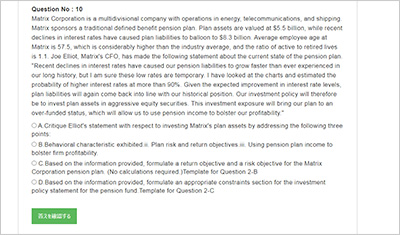
サンプル問題 1: Theresa Bair, CFA, a portfolio manager for Brinton Investment Company (BIC), has recently been promoted to lead portfolio manager for her firm's new small capitalization closed-end equity fund, the Quaker Fund. BIC is an asset management firm headquartered in Holland with regional offices in several other European countries. After accepting the position, Bair received a letter from the three principals of BIC. The letter congratulated Bair on her accomplishment and new position with the firm and also provided some guidance as to her new role and the firm's expectations. Among other things, the letter stated the following: "Because our firm is based in Holland and you will have clients located in many European countries, it is essential that you determine what laws and regulations are applicable to the management of this new fund. It is your responsibility to obtain this knowledge and comply with appropriate regulations. This is the first time we have offered a fund devoted solely to small capitalization securities, so we will observe your progress carefully. You will likely need to arrange for our sister companies to quietly buy and sell Quaker Fund shares over the first month of operations. This will provide sufficient price support to allow the fund to trade closer to its net asset value than other small-cap closed-end funds. Because these funds generally trade at a discount to net asset value, if our fund trades close to its net asset value, the market may perceive it as more desirable than similar funds managed by our competitors." Bair heeded the advice from her firm's principals and collected information on the laws and regulations of three countries: Norway, Sweden, and Denmark. So far, all of the investors expressing interest in the Quaker Fund are from these areas. Based on her research, Bair decides the following policies are appropriate for the fund: Note: Laws mentioned below are assumed for illustrative purposes. • For clients located in Norway the fund will institute transaction crossing, since, unlike in Holland, the practice is not prohibited by securities laws or regulations. The process will involve internally matching buy and sell orders from Norwegian clients whenever possible. This will reduce brokerage fees and improve the fund's overall performance. • For clients located in Denmark, account statements that include the value of the clients' holdings, number of trades, and average daily trading volume will be generated on a monthly basis as required by Denmark's securities regulators, even though the laws in Holland only require such reports to be generated on a quarterly basis. • For clients located in Sweden, the fund will not disclose differing levels of service that are available for investors based upon the size of their investment. This policy is consistent with the laws and regulations in Holland. Sweden's securities regulations do not cover this type of situation. Three months after the inception of the fund, its market value has grown from $200 million to $300 million and Bair's performance has earned her a quarter-end bonus. Since it is now the end of the quarter, Bair is participating in conference calls with companies in her fund. Bair calls into the conference number for Swift Petroleum. The meeting doesn't start for another five minutes, however, and as Bair waits, she hears the CEO and CFO of Swift discussing the huge earnings restatement that will be necessary for the financial statement from the previous quarter. The restatement will not be announced until the year's end, six months from now. Bair does not remind the officers that she can hear their conversation. Once the call has ended, Bair rushes to BIC's compliance officer to inform him of what she has learned during the conference call. Bair ignores the fact that two members of the firm's investment banking division are in the office while she is telling the compliance officer what happened on the conference call. The investment bankers then proceed to sell their personal holdings of Swift Petroleum stock. After her meeting, Bair sells the Quaker Fund's holdings of Swift Petroleum stock. Do the suggestions in the letter from the principals of BIC violate any CFA Institute Standards of Professional Conduct?
サンプル問題 2: Theresa Bair, CFA, a portfolio manager for Brinton Investment Company (BIC), has recently been promoted to lead portfolio manager for her firm's new small capitalization closed-end equity fund, the Quaker Fund. BIC is an asset management firm headquartered in Holland with regional offices in several other European countries. After accepting the position, Bair received a letter from the three principals of BIC. The letter congratulated Bair on her accomplishment and new position with the firm and also provided some guidance as to her new role and the firm's expectations. Among other things, the letter stated the following: "Because our firm is based in Holland and you will have clients located in many European countries, it is essential that you determine what laws and regulations are applicable to the management of this new fund. It is your responsibility to obtain this knowledge and comply with appropriate regulations. This is the first time we have offered a fund devoted solely to small capitalization securities, so we will observe your progress carefully. You will likely need to arrange for our sister companies to quietly buy and sell Quaker Fund shares over the first month of operations. This will provide sufficient price support to allow the fund to trade closer to its net asset value than other small-cap closed-end funds. Because these funds generally trade at a discount to net asset value, if our fund trades close to its net asset value, the market may perceive it as more desirable than similar funds managed by our competitors." Bair heeded the advice from her firm's principals and collected information on the laws and regulations of three countries: Norway, Sweden, and Denmark. So far, all of the investors expressing interest in the Quaker Fund are from these areas. Based on her research, Bair decides the following policies are appropriate for the fund: Note: Laws mentioned below are assumed for illustrative purposes. • For clients located in Norway the fund will institute transaction crossing, since, unlike in Holland, the practice is not prohibited by securities laws or regulations. The process will involve internally matching buy and sell orders from Norwegian clients whenever possible. This will reduce brokerage fees and improve the fund's overall performance. • For clients located in Denmark, account statements that include the value of the clients' holdings, number of trades, and average daily trading volume will be generated on a monthly basis as required by Denmark's securities regulators, even though the laws in Holland only require such reports to be generated on a quarterly basis. • For clients located in Sweden, the fund will not disclose differing levels of service that are available for investors based upon the size of their investment. This policy is consistent with the laws and regulations in Holland. Sweden's securities regulations do not cover this type of situation. Three months after the inception of the fund, its market value has grown from $200 million to $300 million and Bair's performance has earned her a quarter-end bonus. Since it is now the end of the quarter, Bair is participating in conference calls with companies in her fund. Bair calls into the conference number for Swift Petroleum. The meeting doesn't start for another five minutes, however, and as Bair waits, she hears the CEO and CFO of Swift discussing the huge earnings restatement that will be necessary for the financial statement from the previous quarter. The restatement will not be announced until the year's end, six months from now. Bair does not remind the officers that she can hear their conversation. Once the call has ended, Bair rushes to BIC's compliance officer to inform him of what she has learned during the conference call. Bair ignores the fact that two members of the firm's investment banking division are in the office while she is telling the compliance officer what happened on the conference call. The investment bankers then proceed to sell their personal holdings of Swift Petroleum stock. After her meeting, Bair sells the Quaker Fund's holdings of Swift Petroleum stock. With regard to the treatment of clients in Sweden, does the policy that Bair has selected for the Quaker Fund violate any CFA Institute Standards of Professional Conduct?
サンプル問題 3: Theresa Bair, CFA, a portfolio manager for Brinton Investment Company (BIC), has recently been promoted to lead portfolio manager for her firm's new small capitalization closed-end equity fund, the Quaker Fund. BIC is an asset management firm headquartered in Holland with regional offices in several other European countries. After accepting the position, Bair received a letter from the three principals of BIC. The letter congratulated Bair on her accomplishment and new position with the firm and also provided some guidance as to her new role and the firm's expectations. Among other things, the letter stated the following: "Because our firm is based in Holland and you will have clients located in many European countries, it is essential that you determine what laws and regulations are applicable to the management of this new fund. It is your responsibility to obtain this knowledge and comply with appropriate regulations. This is the first time we have offered a fund devoted solely to small capitalization securities, so we will observe your progress carefully. You will likely need to arrange for our sister companies to quietly buy and sell Quaker Fund shares over the first month of operations. This will provide sufficient price support to allow the fund to trade closer to its net asset value than other small-cap closed-end funds. Because these funds generally trade at a discount to net asset value, if our fund trades close to its net asset value, the market may perceive it as more desirable than similar funds managed by our competitors." Bair heeded the advice from her firm's principals and collected information on the laws and regulations of three countries: Norway, Sweden, and Denmark. So far, all of the investors expressing interest in the Quaker Fund are from these areas. Based on her research, Bair decides the following policies are appropriate for the fund: Note: Laws mentioned below are assumed for illustrative purposes. • For clients located in Norway the fund will institute transaction crossing, since, unlike in Holland, the practice is not prohibited by securities laws or regulations. The process will involve internally matching buy and sell orders from Norwegian clients whenever possible. This will reduce brokerage fees and improve the fund's overall performance. • For clients located in Denmark, account statements that include the value of the clients' holdings, number of trades, and average daily trading volume will be generated on a monthly basis as required by Denmark's securities regulators, even though the laws in Holland only require such reports to be generated on a quarterly basis. • For clients located in Sweden, the fund will not disclose differing levels of service that are available for investors based upon the size of their investment. This policy is consistent with the laws and regulations in Holland. Sweden's securities regulations do not cover this type of situation. Three months after the inception of the fund, its market value has grown from $200 million to $300 million and Bair's performance has earned her a quarter-end bonus. Since it is now the end of the quarter, Bair is participating in conference calls with companies in her fund. Bair calls into the conference number for Swift Petroleum. The meeting doesn't start for another five minutes, however, and as Bair waits, she hears the CEO and CFO of Swift discussing the huge earnings restatement that will be necessary for the financial statement from the previous quarter. The restatement will not be announced until the year's end, six months from now. Bair does not remind the officers that she can hear their conversation. Once the call has ended, Bair rushes to BIC's compliance officer to inform him of what she has learned during the conference call. Bair ignores the fact that two members of the firm's investment banking division are in the office while she is telling the compliance officer what happened on the conference call. The investment bankers then proceed to sell their personal holdings of Swift Petroleum stock. After her meeting, Bair sells the Quaker Fund's holdings of Swift Petroleum stock. After her conference call with Swift Petroleum, Bair should have:
CFA Level 3 問題集には、CFA Level 3 Exam試験対策に向けた全362問の練習問題と解答・解説(一部問題)が収録であり、復習に活用できます。
試験準備を進める際、CFA Level 3 問題集を使って出題範囲の知識ポイントを整理し、自身の理解度を客観的に評価することができます。
CFA Level 3 問題集とは、Level-1-CFA-Exam CFA Level 3 試験対策に向けた練習問題と解答を収録したPDFファイルです。設問形式や解答・解説(一部問題)を通して、CFA Level 3 Exam試験の主要トピックを体系的に確認することができます。
試験準備段階で CFA Level 3 問題集を使用し、出題範囲に沿った問題と解答を練習することで、客観的に自身の知識レベルを評価し、苦手分野に絞った復習を行うことができます。
CFA Level 3 問題集は、Level-1-CFA-Exam CFA Level 3 試験の出題分野を整理しており、事前の問題演習を通じて知識ポイントの理解度を確認し、試験準備を進めるための参考資料です。
CFA Level 3 問題集には、Level-1-CFA-Exam CFA Level 3 試験の主要トピックに対応した問題と解答が収録されており、一部の問題には理解を深めるための解説や参考情報が付属しています。
CFA Level 3 問題集は、Level-1-CFA-Exam CFA Level 3 試験の出題範囲の改訂に合わせて継続的に見直し・更新を行っています。また、オンライン無料サンプル問題でも問題と解答を確認でき、CFA Level 3 Exam試験の出題テーマを把握することができます。
GOWUKAKUでは汎用性の高いPDF形式を採用しており、パソコン・スマートフォン・タブレットから CFA Level 3 問題集を直接開いて、いつでも学習・印刷して復習を進めることができます。
CFA Level 3 問題集は、Level-1-CFA-Exam CFA Level 3 試験の学習ポイントを演習形式で整理しており、PDFファイルの手軽さとあわせて日常のスキマ時間を使った学習に適しています。問題演習はいつでも開始・中断でき、苦手分野が見つかった際は重点的に時間を確保して復習を進めることができます。
CFA Level 3 問題集をLevel-1-CFA-Exam CFA Level 3 試験の準備に利用する際は、問題と解答の暗記だけでなく、専門知識の学習と理解を重視してください。
GOWUKAKUはお客様のプライバシー保護を重視し、ご登録情報やご注文情報を第三者に開示することはありません。サイト全体でHTTPS暗号化通信を採用し、安全なお取引環境を確保しています。メールアドレスのみでご利用いただけ、電話番号による認証は不要です。
ご購入日から1年間(365日間)は、CFA Level 3 問題集の更新版を追加料金なしでダウンロードできます。返金の条件は返金ポリシーに従います。
連絡先: [email protected]