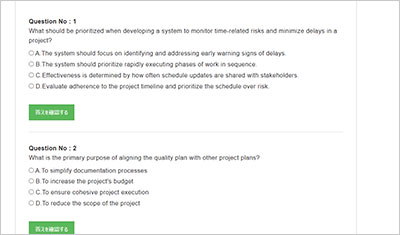
サンプル問題 1: Which of the following approaches would best assess the alignment of permanent work specifications with a project's quality plan?
A: Evaluating the integration of technology in the construction processes
B: Conducting periodic inspections of work progress for adherence to specifications
C: Reviewing compliance reports against the quality plan
D: Reviewing corrective actions implemented from previous quality audits
正解:C
Explanation: To effectively assess the alignment of permanent work specifications with a project's quality plan, reviewing compliance reports against the quality plan is the best approach. Compliance reports provide documented evidence of whether construction activities meet specified quality requirements. These reports typically include: Inspection results Non-conformance reports (NCRs) Corrective actions Material test results Conformance checklists Periodic inspections (option B) are important for monitoring progress, but they only capture a snapshot of adherence and may not provide a full compliance picture over time. Similarly, reviewing corrective actions (option D) focuses on past mistakes rather than a comprehensive alignment assessment. Evaluating technology integration (option A) is more relevant to efficiency rather than quality conformance. Reference from CQM Documents: CQM Student Study Guide (USACE/NAVFAC, 2020) C Module 6.3: Documentation (Discusses compliance reports, tracking deviations, and ensuring alignment with quality plans). Quality Management in Construction Projects (Rumane, 2018) C Chapter 5: Quality Assurance & Quality Control (Emphasizes compliance reports as a tool for verifying adherence to specifications). DCS QA Manual C Section 4.4: Documents and Records (Details compliance reporting as a key element of quality assurance in construction)
サンプル問題 2: What is a key benefit of outsourcing quality control processes to third-party services?
A: Reducing the need for internal training
B: Gaining access to specialized expertise
C: Reducing the responsibilities of the internal quality team
D: Streamlining processes by minimizing oversight from internal quality teams
正解:B
Explanation: Outsourcing quality control (QC) processes to third-party services provides construction companies with significant advantages, primarily by allowing access to specialized expertise. Third-party QC services typically employ highly trained professionals with extensive experience in quality management, testing, and compliance with industry regulations. This expertise can lead to improved accuracy in inspections, adherence to the latest industry standards, and better defect detection, ultimately enhancing construction quality. Additionally, outsourcing can improve project efficiency and reduce overhead costs associated with maintaining an internal quality control team. Companies that outsource QC can focus more on core construction activities while ensuring that independent and unbiased quality checks are conducted. These third-party services also help meet regulatory and contractual quality requirements, mitigating the risk of project delays and costly rework. ASQ Construction Quality Management (CQM) Reference: Quality Management in Construction Projects explains how external audits and third-party assessments enhance compliance and reduce defects. CQM Student Study Guide highlights the benefits of an effective QC system in reducing unnecessary costs and improving project outcomes. DOE & NAVFAC Standards emphasize independent quality assessments as part of ensuring high construction standards. Would you like more insights on specific third-party quality control certifications and compliance requirements?
サンプル問題 3: How does the prequalification process impact the project's risk management strategy?
A: It provides a framework for emergency responses.
B: It increases the likelihood of contractor preparedness in supporting project outcomes.
C: It enables faster implementation of change orders and continuous assessment of project risks.
D: It facilitates the allocation of resources across project phases.
正解:B
Explanation: The prequalification process is a crucial step in construction project management that helps mitigate risks by ensuring that only competent and capable contractors are selected for the project. This process directly contributes to risk management strategies by ensuring that contractors have the necessary experience, financial stability, safety records, and technical expertise to successfully execute the project. Key Impacts of Prequalification on Risk Management Enhances Contractor Preparedness and Reliability: The prequalification process evaluates contractors based on past performance, technical qualifications, and compliance with industry standards. This reduces the chances of project failures due to contractor incompetence, poor workmanship, or financial instability. The QA Library on Project Risk Management states that "contractor selection plays a major role in risk mitigation as prequalified contractors bring reliability, financial stability, and compliance with safety and quality requirements". Reduces Project Delays and Cost Overruns: Prequalified contractors are more likely to adhere to project schedules and budgets, thereby reducing risks associated with delays and financial overruns. The Quality Management in Construction Projects guide highlights that risk management in construction projects must focus on delivering work as per the originally accepted scope, schedule, and budget. Improves Safety and Compliance with Regulations: Contractors undergo safety performance evaluations, ensuring that they meet required OSHA and industry safety standards. The Construction Safety Requirements Manual states that subcontractors must comply with the SLAC Injury and Illness Prevention Program (IIPP), which ensures a safe and compliant working environment. Mitigates Legal and Contractual Risks: The prequalification process includes a legal and financial assessment to prevent disputes, breaches of contract, and liability issues. Contractors with a history of contract disputes or litigation can be identified and excluded from the bidding process. Why Other Options are Incorrect: Option A (Emergency Response Framework): While risk management includes emergency preparedness, the prequalification process is not primarily focused on this aspect. Option C (Faster Change Order Implementation): Change order implementation is managed through contract administration and project controls, not through prequalification. Option D (Resource Allocation Across Phases): Prequalification does not directly affect resource allocation across different project phases, which is typically handled through project planning and scheduling. ASQ Construction Quality Management (CQM) Reference: QA Library on Risk Management and Contractor Selection Quality Management in Construction Projects on Risk Management Strategies Construction Safety Requirements Manual on Contractor Safety Compliance