

GOWUKAKU|IT認定資格の最新の試験問題集(PDF版・無料サンプル問題)を提供しています
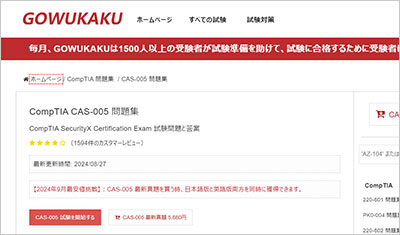
CompTIA SecurityX Certification Exam 試験問題と答案
最終更新日: 2026/10/17 収録内容確認済 | PDF問題集: 全 117 問収録
CAS-005試験対策の学習資料(PDF版:日本語・英語2言語セット)|1年間(365日)無料アップデート付
| 対象試験 | CompTIA CAS-005 — CompTIA SecurityX Certification Exam |
|---|---|
| 収録問題数 | 全 117 問(解答付き/オンライン無料サンプル 415 問公開中) |
| 提供形式・言語 | PDF版(日本語版・英語版の2言語セット) |
| 販売価格(税込) | 6,880円(税込) ※1回払いの買い切り商品です。自動更新や追加請求はありません。 |
| 引き渡し・有効期間 | 決済完了後すぐにダウンロード可能(日本語版が準備中の科目は、英語版を即時ダウンロードのうえ、日本語版は準備完了次第ご登録メールへ自動送付・有効化されます)。ご購入日から1年間(365日間)無料アップデート対応(期間内の更新版も追加料金なしでダウンロード可能)。 |
| お問い合わせ窓口 | メールサポート:[email protected](注文確認・再送・教材に関するご質問|返金・交換条件) |
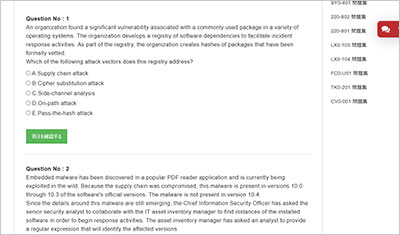
収録内容から抜粋したサンプル問題です。「解答・解説を表示」をクリックすると正解を確認できます。
サンプル問題 1: Which of the following AI concerns is most adequately addressed by input sanitation?
サンプル問題 2: A systems administrator wants to introduce a newly released feature for an internal application. The administrate docs not want to test the feature in the production environment. Which of the following locations is the best place to test the new feature?
サンプル問題 3: A cybersecurity architect is reviewing the detection and monitoring capabilities for a global company that recently made multiple acquisitions. The architect discovers that the acquired companies use different vendors for detection and monitoring. The architect's goal is to: • Create a collection of use cases to help detect known threats • Include those use cases in a centralized library for use across all of the companies. Which of the following is the best way to achieve this goal?
CAS-005問題集による問題演習は、CompTIA CASP+試験の復習に利用できます。参考書を読むだけでなく、実際に問題を解くことで理解度を確認できます。
効率よく試験対策を進めるためには、学習段階に合った復習教材を準備することが大切です。まずはCAS-005問題集で全体像を確認します。
まず、CAS-005問題集には、CAS-005試験対策に向けた練習問題と解答が含まれています。
次に、CAS-005問題集に取り組む際は、難しい設問や長文問題に時間をかけすぎず、印を付けて後から重点的に見直す方法が効果的です。
継続的に問題演習に取り組むことで知識の定着を確認できます。CAS-005問題集を活用することで、復習を計画的に進められます。
CAS-005問題集には、CompTIA SecurityX Certification Exam試験の主要な知識ポイントと設問形式がまとめられており、復習における弱点の把握に役立ちます。
CAS-005問題集の使用は効果的です。同じ知識ポイントが複数の質問に何度も現れることがわかった場合、知識ポイントの質問に対する感度を維持しながら、潜在意識の中で質問を理解するルーチンがあります。
CAS-005問題集の使用は、CompTIA CASP+フィールド知識構造に関する知識に基づいている必要があります。基礎が非常に弱いかゼロでさえある場合は、最初に本から始める必要があります。そうしないと、効果が逆効果になります。
通常、試験には多くの原則はありませんが、方法とアイデアは似ています。CAS-005問題集のすべての質問をマスターした後は、質問を行うための一種の慣性があります。試験で同様の質問を見ると、あなたの心は考えやアイデアがあります。
しかし、盲目的に質問をするだけでは効果が得られません。間違った質問を覚えることを学ぶ必要があります。これは理解しやすいです。CAS-005問題集でエラーが発生しやすい質問を見つけた場合は、手元にあるこの質問の質問と回答を書き留め、質問の横に独自の理解を記入する必要があります。
最もタブーなことは、トピックに飽きることです。つまり、トピックが長すぎるか理解できない場合は、トピックをバイパスすることです。質問に答える気がない場合は、ラベルを付けて、良い時間と環境に変更してください。痛みを伴うよりも、幸せに向き合う方が良いです。
CAS-005問題集は、積極的に練習するだけでなく、積極的に整理することで、調査している問題を明らかにすることしかできず、質問を理解して回答するのに役立ちません。これには、トピックトラップ、知識の抜け穴、回答スキルなど、重要と思われる情報をノートブックに整理し、電話で写真を撮り、断片化した時間を使用して統合する必要があります。
質問を整理しないと、記憶を過大評価する可能性があります。整理に慣れていると、提案のルーティンが見つかる可能性が高いので、この質問を見ると、テストしたい知識のポイントがわかり、質問を読んだ後の答えがわかるでしょう。
質問を組み合わせて整理することで、知識をフレームワークにまとめるだけでなく、事前に安定した試験状態を形成することができます。試験を受ける際は、整理した知識を呼び出して落ち着いて問題に取り組むことができます。
CAS-005問題集は、CAS-005試験に関連する知識ポイントを包括的に要約し、さまざまな質問タイプの複数の質問に分散しています。質問の種類には、通常、単一選択の質問、複数選択の質問、正誤問題、ドラッグマップの質問、空欄に記入する質問、実験的な質問が含まれます(試験バージョンごとに異なる種類の質問が含まれます)。
単一選択問題は出題数が多く、知識の定着度をテンポよく確認しやすい形式です。CAS-005問題集で繰り返し演習を行うことで、設問のポイントを素早く把握できるようになります。
複数の選択肢の質問、答えは一意ではなく、試験の質問は多くありませんが、それらは合計スコアの多くを占めています。一般的には、質問を見て、頭の中で思考プロセスを経て、一致する答えを確認するだけです。通常、練習後にナレッジポイントを整理して統合する限り、質問への回答は1つ以上のナレッジポイントの要約であることがわかります。
画像のタイトルをドラッグすると、通常、タイトルによってシーンがデザインされ、画像(画像にはテキストまたはコードが含まれます)を指定された手順またはリンクにプルして、シーンを合理化できます。質問の内容が長くなることもありますが、CAS-005問題集のドラッグする質問をすべて理解すると、ルーチンがいっぱいであることがわかります。
一部のCompTIA試験科目で出題される穴埋め問題は、基礎的な用語や概念の理解を確認する形式です。問題演習を進める際も落ち着いて要点を確認しておくことで、本番でも焦らず対応できます。
実験問題で問われる知識ポイントは比較的固定されています。CAS-005問題集に収録された関連問題を通じて、手順と知識ポイントを確認できます。
質問をするのに時間がかかり、偶然に2、3時間経ちます。知識ポイントを整理する時間と相まって、厳しい労働時間の練習を確実にするために以下の措置が採用されています。
毎日のスケジュールを計画し、タスクを書き留めて、強制的に完了させます。このような計画を立てたら、毎日必要な数の質問に到達したり、割り当てを超えたりすると、大きな満足感が得られます。スケジュール管理を導入する初期段階では、自分の効率を明確に理解していない可能性があり、適応するための調整期間を設けることができます。
オプションの学習本と教育ビデオ。代わりに、それは学習と習熟度、およびCAS-005問題集を通じて明らかにされた弱点を統合することです。演習を間違えた場合は、本と説明ビデオの中で答えを探してください。この時点で、知識のポイントを整理するために読むよりも、目的を持って答えを検索する方がはるかに効果的です。
週末や日常の空き時間を活用して復習を進めることができます。問題演習を行う際は静かな環境を選ぶことで集中しやすくなります。無理な夜更かしを避け、計画的に学習を進めることを推奨します。
ご入金後、マイページからCAS-005試験問題集の日本語版と英語版の2言語セット(PDF形式)をダウンロードできます。また、試験範囲の改訂や問題集の更新が行われた場合、ご購入日から1年間(365日間)は更新版を追加料金なしでダウンロードできます。返金の条件は返金ポリシーに従います。